
Educational Dump on Opal Fossils
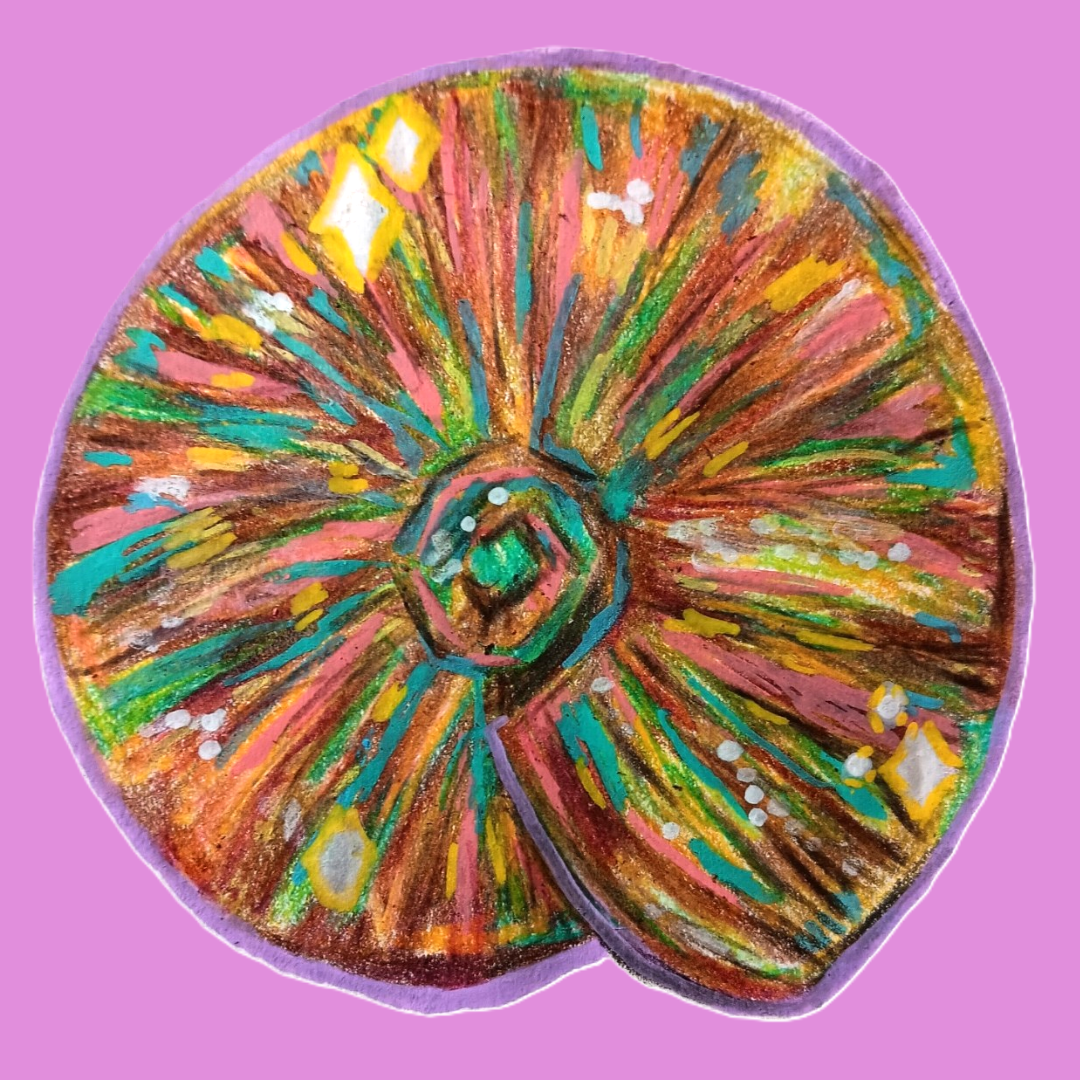
Hello folks!
If you enjoyed yesterday’s Messy Monday sketches, then saddle up—because today I’ve got an extra shiny treat for you. While I show off my newest colorful stone-creature from ages past, I’ll also be dropping some science tid=bits: what opalization is, how it happens, and a few famous fossils that turned into literal gemstones.
________________________________________
What is an opal?
An opal is a precious stone known for its iridescent, rainbow-like shimmer. That play of color comes from microscopic silica spheres arranged in tight, orderly layers—when light hits them, it diffracts into those dreamy hues.
________________________________________
How does opalization happen?
Fossils can become opalized through two main pathways, both involving silica-rich groundwater and millions of years of geological patience.
• Internal molding (or cast formation) — The original organic material decays, leaving behind a hollow cavity. Silica-rich water seeps in, depositing layer after layer of micro silica spheres until the cavity is completely filled. The result: a perfect opal cast of the original shape.
• Silicification — Instead of filling a cavity, the silica-rich water replaces the actual molecules of the bone, shell, wood, or skin. This mineralization preserves both internal and external details with incredible fidelity—just in shimmering opal instead of organic tissue.
Both processes are rare, slow, and utterly spectacular.
_______________________________________
Famous opalized fossils
A few legendary specimens show just how magical this process can be:
• Eric the Pliosaur — One of the most complete opalized vertebrate fossils ever found, with roughly 90% of the skeleton preserved. Even the stomach contents survived the ages.
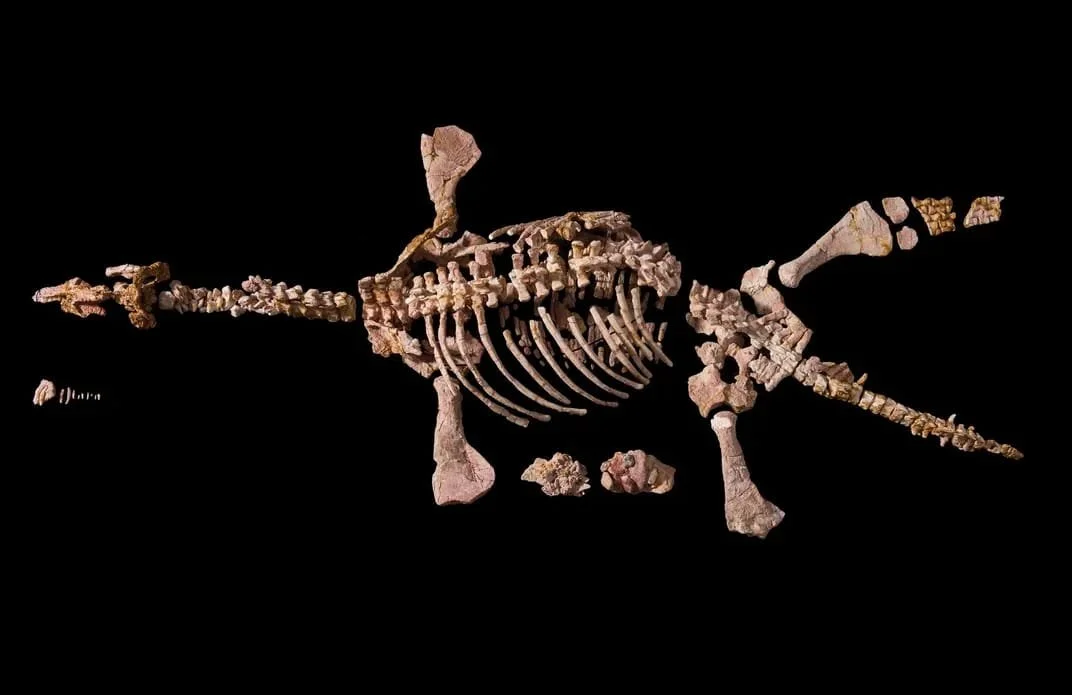
Image courtesy of the plumb club (https://plumbclub.com/the-fascinating-world-of-opalized-fossils/)
• Steropodon jaw — A jawbone from an ancient monotreme, a distant relative of today’s platypus.
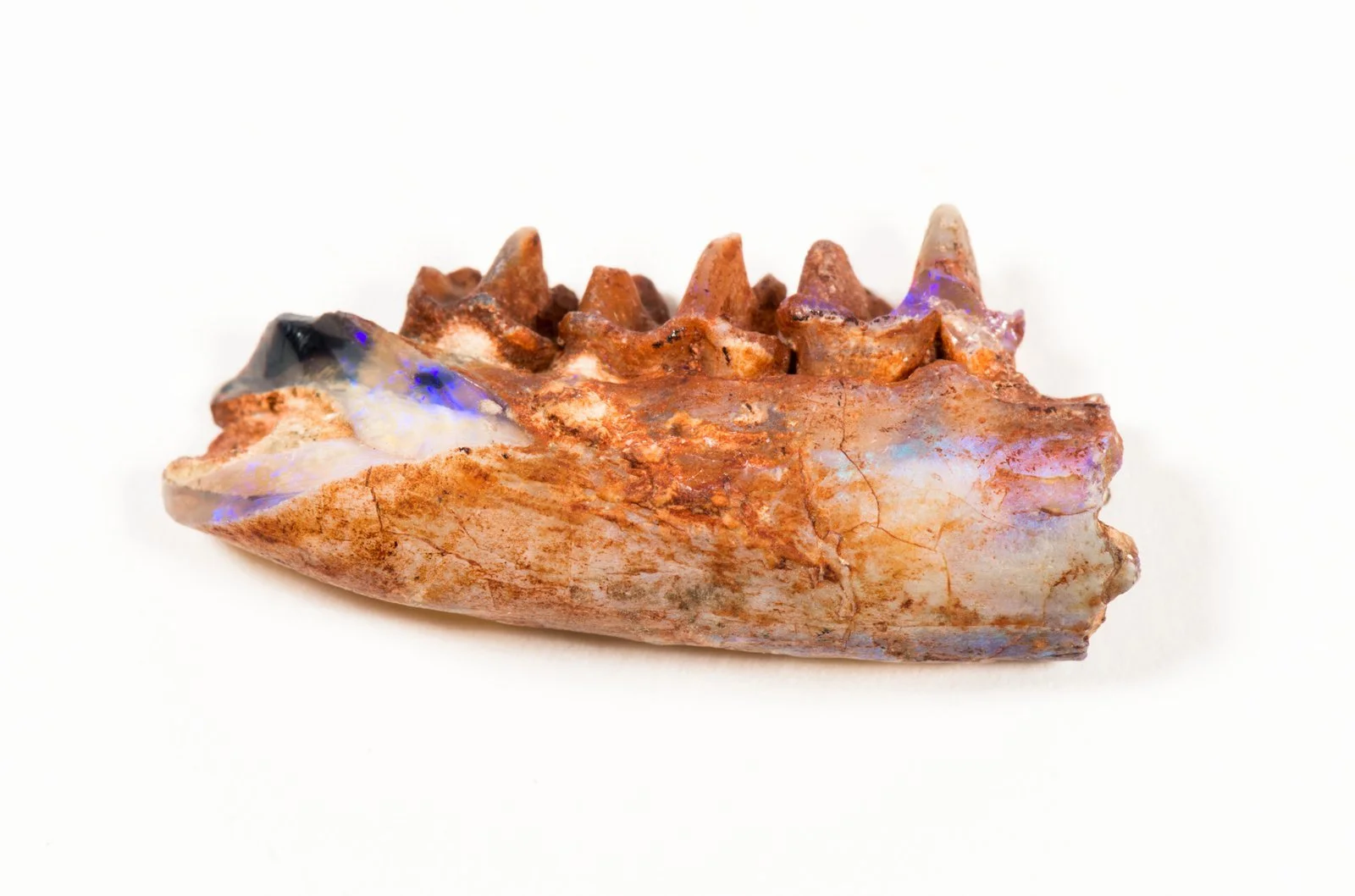
Image courtesy of Australian Museum (https://australian.museum/learn/australia-over-time/extinct-animals/steropodon-galmani/)
• Lightning Claw — A megaraptoroid dinosaur whose skull includes a massive opal replacement, giving it a literal gemstone grin. (This will be part of my opal illustration collection, stay tuned!)
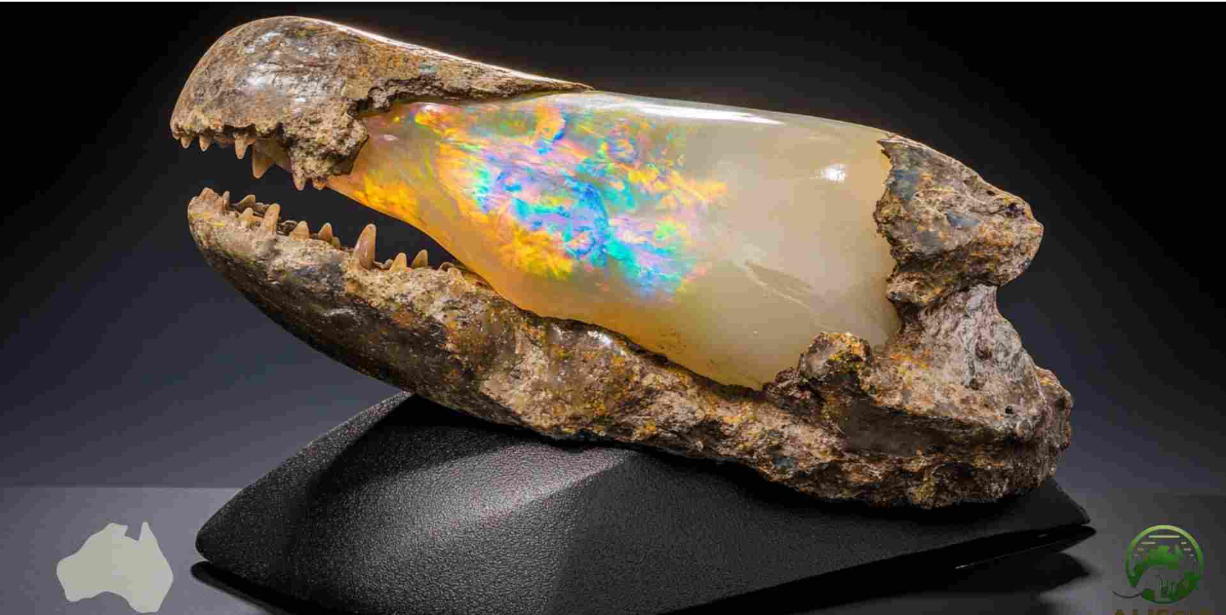
Image courtesy of AussieAnimals (https://aussieanimals.com/wildlife/prehistoric/dinosaurs-black-opals-lightning-ridge/)
All of these treasures come from Lightning Ridge in New South Wales, Australia—a world famous hotspot for opalized fossils where prehistoric creatures and plants have been transformed into precious stones.
If you want to dive deeper into this dazzling location, here’s a great resource:
https://australian.museum/learn/australia-over-time/fossils/sites/lightning-ridge/
Sources:
https://australian.museum/learn/australia-over-time/extinct-animals/steropodon-galmani/
https://www.geologyin.com/2017/03/how-do-opalised-fossils-form.html